How Tidio Can Transform Your Customer Support
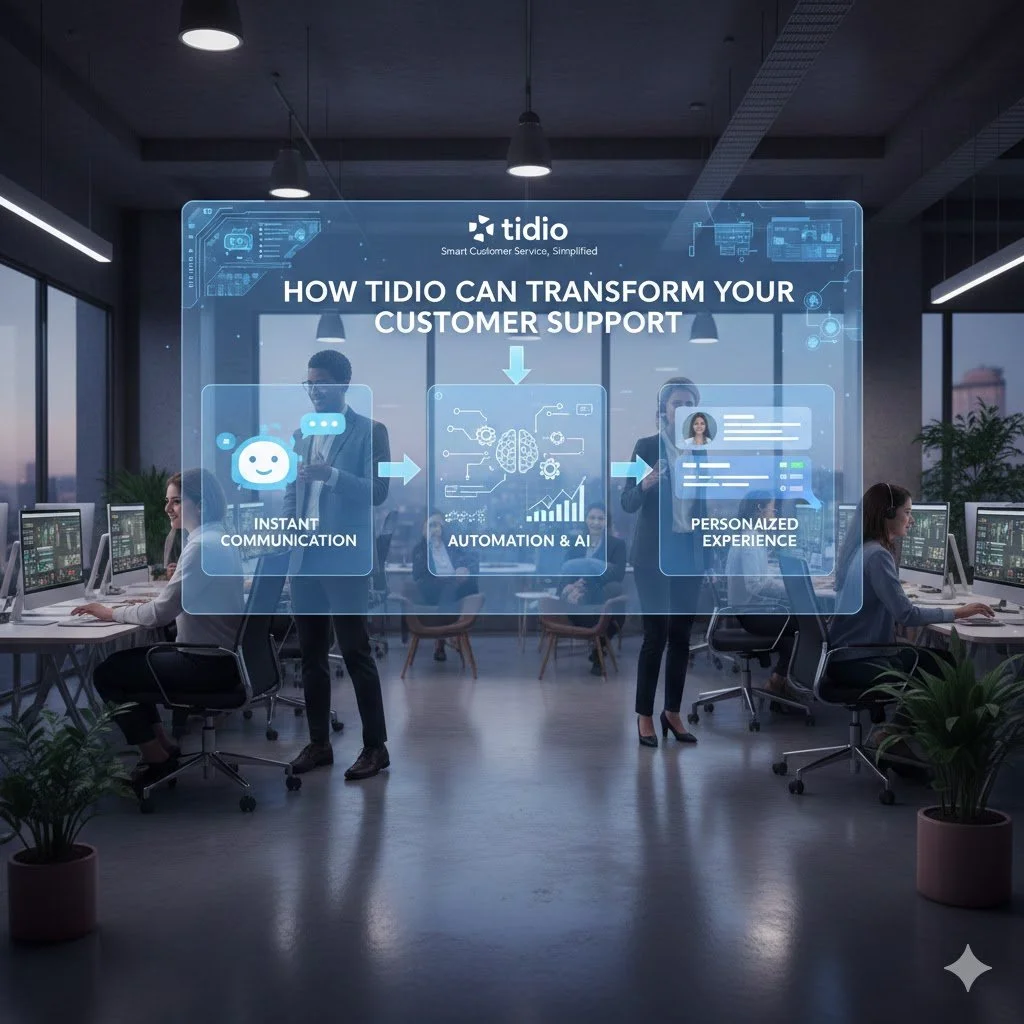
Integrating Tidio with Existing Support Channels
Tidio excels in environments where businesses already utilize multiple customer support channels, such as email and social media. Its integration capabilities allow for a cohesive approach to customer interaction, making it particularly suitable for small to medium-sized enterprises that require streamlined communication without the need for extensive IT resources.
A significant limitation of Tidio is that while it offers robust integration options, the effectiveness largely depends on the existing systems in place. Businesses using outdated or incompatible platforms may find that Tidio's capabilities are underutilized, leading to a fragmented support experience rather than the intended seamlessness.
Real-World Workflow Example
Consider an e-commerce business that employs both email support and social media channels. By integrating Tidio with their existing email platform and Facebook Messenger, they can ensure that inquiries from all sources funnel into a single dashboard. This allows their support team to respond quickly regardless of where the customer initiated contact, enhancing response times and overall satisfaction.
Many teams overestimate the impact of automation through Tidio’s chatbot features. They assume that automating responses will eliminate the need for human agents altogether. In practice, while chatbots can handle basic inquiries effectively, complex issues still require human intervention. Misplacing reliance on automation can lead to customer frustration if they encounter problems beyond the chatbot's scope.
- Best suited for businesses looking to unify multiple support channels.
- Ideal for companies with moderate IT resources seeking efficient integration solutions.
- Not as effective if existing systems are outdated or incompatible.
Integrating Tidio effectively requires assessing current systems to avoid fragmentation.
Leveraging AI for Enhanced Customer Interactions
Tidio's AI capabilities are particularly beneficial for businesses aiming to enhance customer interactions through intelligent automation. These features are best suited for companies that handle a high volume of inquiries, such as e-commerce platforms or service providers, where timely and accurate responses are crucial.
A notable limitation of Tidio's AI functionality is its dependency on the quality of input data. If customer data is sparse or poorly structured, the chatbot may struggle to deliver relevant responses, potentially leading to customer dissatisfaction. This can be particularly detrimental in competitive markets where every interaction counts.
Concrete Workflow Example
For instance, an online retail store can utilize Tidio's chatbot to engage visitors immediately upon landing on their site. The bot can greet users with personalized messages based on their browsing history and suggest products accordingly. This proactive engagement not only enhances user experience but also increases the likelihood of conversions.
Teams often overestimate the ability of Tidio’s AI to completely replace human agents. While the chatbot excels at handling routine inquiries and FAQs, it cannot replicate the nuanced understanding and empathy that human agents provide during complex interactions. Misunderstanding this balance can lead to gaps in customer service quality.
- Best for businesses with high inquiry volumes needing rapid response capabilities.
- Ideal for e-commerce sites looking to personalize customer experiences.
- Limited effectiveness if underlying customer data is inadequate or poorly managed.
AI-driven interactions require robust data management for optimal performance.
Real-Time Analytics for Proactive Support Strategies
Tidio's real-time analytics capabilities are particularly advantageous for businesses aiming to enhance their customer support strategies. This tool is best suited for companies that prioritize data-driven decision-making and need to adapt quickly to customer behavior patterns.
However, a significant limitation is that the effectiveness of these analytics is contingent upon the volume of interactions. Smaller businesses with lower traffic may not derive as much actionable insight, potentially limiting the perceived value of Tidio's analytics features.
Concrete Workflow Example
For example, a mid-sized e-commerce business can utilize Tidio's analytics dashboard to monitor customer engagement metrics in real time. By identifying which products attract the most inquiries, they can adjust their inventory and marketing strategies accordingly. This proactive approach not only enhances customer satisfaction but also optimizes sales opportunities.
Many teams misinterpret the role of analytics in shaping support strategies. They often assume that simply having access to data will lead to improved outcomes without a clear plan for implementation. In reality, without actionable insights derived from data analysis, businesses risk making misguided decisions that fail to address actual customer needs.
- Best suited for businesses focused on leveraging data to refine support processes.
- Ideal for companies experiencing high interaction volumes seeking immediate insights.
- Not as effective for smaller operations where data may be sparse or less actionable.
Real-time analytics enable proactive adjustments based on customer behavior.
Customization Options for Brand Alignment
Tidio offers extensive customization options that allow businesses to align their customer support interface with their brand identity. This feature is best suited for small to medium-sized enterprises that prioritize brand consistency across all customer touchpoints and understand the importance of a cohesive visual and communicative presence.
However, a notable limitation is that while Tidio provides these customization features, they require a certain level of design sensibility and technical know-how. Businesses lacking these skills may struggle to fully leverage Tidio's capabilities, potentially resulting in a suboptimal implementation that does not resonate with customers.
Concrete Workflow Example
For instance, an online boutique can customize their Tidio chat interface by incorporating their brand colors and logo. They can also configure automated greetings that reflect their friendly and casual tone, ensuring that customers feel welcomed as soon as they engage. This tailored approach not only reinforces brand identity but also sets the stage for positive interactions.
Many teams misjudge the impact of customizing automated messages. They often believe that simply adding their brand voice will suffice, overlooking the necessity of contextually relevant content. If automated responses fail to address specific customer queries or concerns effectively, it can lead to frustration and disengagement.
- Best suited for brands aiming for consistent visual identity across platforms.
- Ideal for businesses with resources to invest in design and customization.
- Not as effective if teams lack the expertise to implement advanced features.
Effective customization requires both creativity and technical skill.
Multilingual Support Capabilities
Tidio's multilingual support capabilities are particularly advantageous for businesses targeting diverse customer bases in regions like Australia and the USA. This feature is best suited for companies that operate in multicultural environments or those looking to expand their reach across language barriers.
A critical limitation of Tidio's multilingual functionality is that it relies on automated translation tools, which may not always capture the nuances of language or context. This can lead to misunderstandings if customers receive poorly translated messages, potentially damaging customer relationships.
Practical Workflow Example
For instance, a travel agency using Tidio can set up their chatbot to greet users in multiple languages based on their browser settings. When a Spanish-speaking customer visits the site, they receive responses in Spanish, enhancing their experience and likelihood of engagement. This immediate connection can significantly improve conversion rates.
Many teams misjudge the effectiveness of automated translation features. They often assume that enabling multiple languages will automatically enhance customer satisfaction without considering the quality of translations. Poorly executed translations can frustrate users rather than facilitate communication.
- Best suited for businesses with diverse customer demographics.
- Ideal for companies looking to enhance international reach.
- Not effective if relying solely on automated translations without quality checks.
Effective multilingual support requires careful monitoring and adjustment of translation quality.
Reducing Response Times with Automation Tools
Tidio's automation tools are particularly effective for businesses that experience high volumes of customer inquiries and require rapid response capabilities. This is especially true for e-commerce platforms and service-oriented companies where immediate engagement can significantly influence customer satisfaction and retention.
However, a notable limitation is that while automation can enhance response speed, it may lack the nuanced understanding necessary for complex queries. Businesses relying too heavily on automated responses risk alienating customers who have specific or intricate issues that require human intervention.
Implementing Automated Greetings and FAQs
For instance, a small online retailer can set up Tidio to automatically greet visitors with personalized messages based on their browsing history. If a customer has previously viewed certain products, Tidio can initiate a conversation about those items, providing quick answers to common questions without human input. This approach not only speeds up initial interactions but also creates a more engaging shopping experience.
Setting Up Triggered Responses for Common Inquiries
Another effective strategy involves configuring Tidio to trigger specific responses based on keywords in customer inquiries. For example, if a customer types shipping options, Tidio can instantly provide relevant information about delivery methods and timelines. This reduces the time customers spend waiting for answers, thereby improving their overall experience.
Automation should complement human support, not replace it.
Many teams miscalculate the scope of automation’s capabilities in Tidio. They often assume that implementing automated responses will cover all customer needs, leading to frustration when complex issues arise that require a human touch. Effective support strategies should balance automation with readily available human assistance to address nuanced inquiries.
Streamlining Issue Resolution Processes Through Automation
"For example, if a customer reports an issue with an order through Tidio’s chat feature, the bot can collect essential details such as order number and issue type before escalating the conversation to a human agent. This pre-qualification process ensures that agents receive all necessary information upfront, significantly reducing resolution times and enhancing efficiency in handling customer issues.
Training and Onboarding Staff on Tidio Utilization
Effective training and onboarding for Tidio is crucial for maximizing its utility in customer support. This approach fits best when businesses recognize the importance of equipping their staff with the necessary skills to leverage Tidio's full range of features, particularly in environments with high customer interaction.
A significant limitation is that many organizations underestimate the time and resources required for comprehensive training. Rushing this process can lead to a superficial understanding of Tidio's capabilities, which ultimately hampers performance and reduces the tool's effectiveness in real-world applications.
Concrete Workflow Example
For instance, a small tech support firm can implement a structured onboarding program where new staff members undergo a series of workshops focused on Tidio's functionalities. By engaging in hands-on exercises that simulate common customer interactions through Tidio chat, employees can gain practical experience that enhances their confidence and efficiency when dealing with actual inquiries.
Teams often misjudge the necessity of ongoing education regarding Tidio usage. They may believe that initial training is sufficient, neglecting the need for regular updates and refresher sessions as new features are introduced or as customer needs evolve. This oversight can lead to stagnation in service quality and missed opportunities to optimize support processes.
- Best suited for businesses prioritizing comprehensive staff training on tools.
- Ideal for companies with varied customer engagement needs requiring skilled operators.
- Not effective if training resources are limited or undervalued by management.
Investing in thorough onboarding ensures staff are equipped to utilize Tidio effectively.
Measuring Success: Key Performance Indicators (KPIs) with Tidio
Tidio provides a robust framework for measuring customer support success through well-defined Key Performance Indicators (KPIs). This platform is best suited for businesses that prioritize data-driven decision-making and require insights to enhance their customer service effectiveness.
One significant limitation of relying solely on Tidio for KPIs is the potential for data overload without actionable insights. Businesses may become overwhelmed by the volume of metrics available, leading to analysis paralysis where critical decisions are delayed or misinformed. It's essential to focus on a select few metrics that align with business goals rather than trying to track every possible indicator.
Defining Metrics for Customer Satisfaction Post-Interaction
To effectively gauge customer satisfaction, businesses should focus on metrics such as Customer Satisfaction Score (CSAT) and Net Promoter Score (NPS). For instance, after a chat interaction, Tidio can automate follow-up surveys that ask customers to rate their experience. This direct feedback loop provides immediate insights into areas needing improvement and helps in understanding customer sentiment.
Assessing Response Time Efficiency Through Analytics Dashboards
Tidio’s analytics dashboards allow businesses to monitor response times effectively. For example, a small business can set benchmarks for average response times and track performance against these standards. If the data reveals that response times are lagging during peak hours, teams can adjust staffing or automation strategies accordingly to enhance efficiency.
Evaluating Chatbot Performance Against Human Agents
A common misconception is that chatbots will outperform human agents in all scenarios. While Tidio's chatbot can efficiently handle routine inquiries, evaluating its performance in comparison to human agents reveals limitations in understanding complex issues. Regular assessments of both chatbot interactions and human responses can highlight areas where further training or adjustments are necessary.
Focusing on key metrics rather than an overwhelming number of data points is crucial for effective decision-making.