How Tidio Can Transform Your Customer Engagement
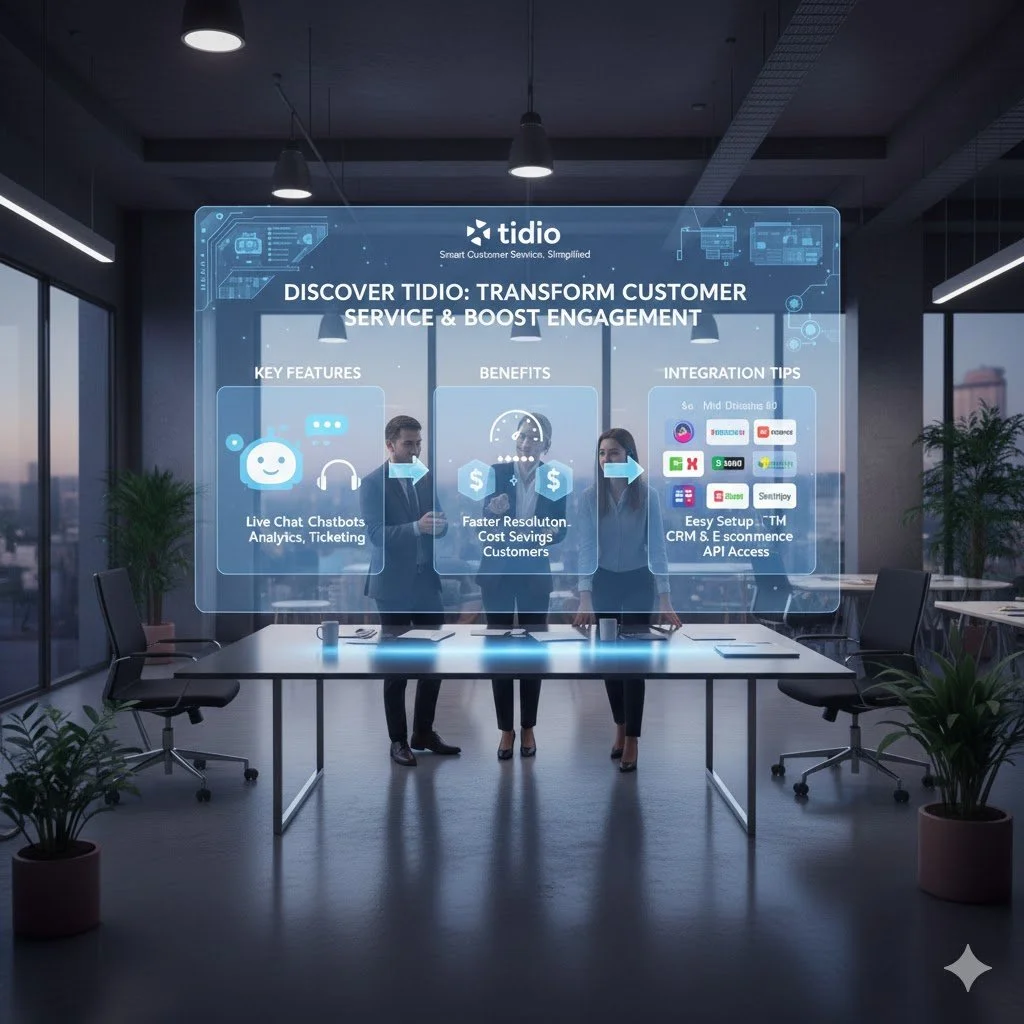
Integrating Tidio with Existing Platforms
Tidio excels in environments where businesses already leverage e-commerce platforms like Shopify and WooCommerce. Its seamless integration with these systems allows for quick setup and immediate enhancement of customer engagement without extensive technical knowledge.
However, one limitation is that while Tidio offers robust features, its effectiveness can be hampered if a business relies on outdated or incompatible systems. Companies that have heavily customized their platforms may face challenges during integration, which can lead to underutilization of Tidio's capabilities.
For instance, a small online retailer using Shopify can integrate Tidio to automate responses to common inquiries about shipping times and product availability. This setup allows the retailer to engage customers instantly while freeing up staff to focus on more complex issues.
Many teams overestimate the simplicity of integrating Tidio into existing workflows. They often assume that once the chat feature is live, customer engagement will automatically improve. In practice, without proper training and adjustment of internal processes, businesses may find themselves overwhelmed by chat inquiries or failing to provide timely responses.
Leveraging Chatbots for Enhanced Customer Interaction
Tidio's chatbots are particularly effective for businesses that need to handle high volumes of customer inquiries efficiently. Small to medium-sized e-commerce businesses often benefit most from Tidio's automation features, as they allow for immediate engagement without the necessity of a large customer support team.
However, relying solely on chatbots can lead to limitations in customer satisfaction. While Tidio's chatbot can manage common queries, it may struggle with complex issues that require human intervention. This limitation can frustrate customers if they feel their concerns are not adequately addressed.
Designing Conversational Flows Tailored to Customer Needs
Creating effective conversational flows is crucial. For example, a fashion retailer using Tidio can design a chatbot that guides customers through size selection based on previous purchase data and FAQs. This not only enhances user experience but also reduces the number of returns due to sizing issues.
Utilizing AI to Provide Instant Responses and Support
Tidio's AI capabilities allow it to provide instant responses, which is essential during peak shopping times. A small electronics store might use Tidio to respond instantly to product availability inquiries, thus preventing potential lost sales from indecisive customers waiting for human replies.
Automated responses should complement, not replace, human interaction.
Many teams mistakenly believe that implementing a chatbot will solve all their customer service problems. In reality, while chatbots like Tidio can handle routine inquiries efficiently, they cannot replicate the nuanced understanding and empathy that human agents provide when dealing with more complex issues.
Analyzing Chatbot Interactions for Continuous Improvement
'Regular analysis of chatbot interactions can reveal trends in customer behavior and common pain points. For instance, if multiple users ask about warranty details but receive unsatisfactory answers from the bot, this indicates an area for improvement in both the bot's programming and potentially the company's warranty communication strategies.'
Utilizing Real-Time Data to Drive Engagement Strategies
Real-time data utilization is essential for businesses aiming to enhance their customer engagement strategies. Tidio's capabilities in tracking user behavior and engagement metrics allow businesses to make informed decisions that directly impact customer satisfaction and retention.
Tracking User Behavior and Engagement Metrics
The ability to monitor how users interact with your website provides actionable insights. For instance, a small online retailer can analyze which products attract the most inquiries via Tidio chat. This data can inform marketing strategies, such as promoting high-interest items or offering targeted discounts.
Segmenting Audiences Based on Interaction Patterns
Effective segmentation allows businesses to tailor their messaging. By using Tidio's interaction data, a company can identify distinct user groups based on their engagement levels and preferences. For example, a business might find that frequent visitors respond positively to promotional offers, while first-time visitors require more informative content before making a purchase.
Personalizing Communication Based on Data Insights
'Personalization is key in today's competitive landscape. Tidio enables businesses to customize communication based on real-time insights, enhancing the overall customer experience. A travel agency using Tidio could send tailored messages about destination deals to users who have previously shown interest in specific locations.
- Best for small to medium-sized businesses looking for targeted engagement strategies.
- Limitation relies heavily on accurate data interpretation; misinterpretation can lead to misguided strategies.
Data-driven decisions lead to better customer interactions.
Many teams overestimate the simplicity of implementing these data-driven strategies. They often assume that collecting data will automatically translate into improved engagement without recognizing the need for ongoing analysis and adjustment of tactics based on those insights.
Implementing Proactive Communication Techniques
Proactive communication is crucial for businesses aiming to enhance customer engagement through Tidio. It is particularly effective for e-commerce and service-based businesses that seek to anticipate customer needs and address inquiries before they escalate.
However, a significant limitation lies in the potential for misalignment between automated messaging and actual customer intent. If the proactive messages are not carefully crafted, they can come off as intrusive or irrelevant, leading to customer frustration rather than engagement.
Setting up targeted messages based on user activity
For example, an online clothing store can set up Tidio to send targeted messages when users display specific behaviors, such as spending time on a product page without making a purchase. This can trigger a message offering assistance or even a discount on the viewed item, effectively nudging the user towards conversion.
Using triggers to initiate conversations at key moments
'Utilizing Tidio's triggers for initiating conversations at critical moments is where many teams falter. They often overestimate the effectiveness of generic triggers without considering user context. For instance, triggering a chat when a user has been inactive for too long may not resonate if they were simply reading product details.'
- Best suited for businesses with clear customer journeys.
- Requires careful monitoring to avoid overwhelming users with messages.
Proactive communication should feel personal and relevant; otherwise, it risks alienating customers.
Optimizing Customer Feedback Loops through Tidio
Tidio is particularly effective for businesses that prioritize real-time feedback from customers to drive product and service enhancements. Companies in e-commerce, especially those with dynamic product offerings, will find Tidio's capabilities invaluable for collecting actionable insights directly from customer interactions.
However, a notable limitation is that businesses must actively manage and analyze the feedback collected. If organizations neglect this aspect, they risk missing critical insights that could inform product development or customer service improvements.
For instance, an online cosmetics retailer can utilize Tidio to prompt customers at the end of a chat session to rate their experience or provide comments on specific products. This immediate feedback loop allows the retailer to quickly identify trends in customer satisfaction or dissatisfaction regarding new product lines.
Many teams misjudge the importance of follow-up on feedback received through Tidio. They often assume that simply collecting data will suffice, overlooking the necessity of implementing changes based on customer insights. Without a clear strategy for addressing identified issues, businesses may find themselves repeatedly facing the same customer complaints.
Collecting Feedback via Chat Interactions for Product Improvement
Using Tidio's chat feature to solicit feedback during interactions can lead to significant improvements in product offerings. For example, an online pet supply store might ask customers about their satisfaction with a recently launched dog food brand during the chat. This direct approach not only engages customers but also provides immediate data that can influence future inventory decisions.
Analyzing Sentiment from Customer Conversations
Sentiment analysis tools integrated with Tidio can help businesses gauge customer emotions during chats. For instance, a small travel agency could analyze conversations to determine if clients feel excited about new travel packages or frustrated by booking processes. This insight allows them to adjust their offerings and communication strategies accordingly.
'Using Insights to Refine Service Offerings and Customer Experience
Regularly reviewing feedback gathered through Tidio enables businesses to refine their service offerings effectively. A local bakery could implement changes based on customer suggestions regarding new flavors or dietary options, enhancing overall satisfaction and potentially increasing sales.
Enhancing Multichannel Engagement with Tidio
Tidio is best suited for businesses that operate across multiple channels and seek to unify their customer engagement efforts. Its capability to integrate live chat functionality into websites, social media platforms, and email communication makes it a comprehensive solution for enhancing customer interactions.
A notable limitation of Tidio lies in the potential complexity of managing diverse channels effectively. Businesses may struggle if they attempt to engage customers on too many platforms simultaneously without a cohesive strategy. This can lead to fragmented messaging and customer confusion.
For example, a small online bookstore can utilize Tidio to implement live chat on their website while also integrating chat functionalities into their Facebook page. When a customer inquires about book availability via Facebook, the conversation can be seamlessly continued on the website, allowing for consistent support regardless of the platform.
Many teams misjudge the importance of maintaining consistent brand messaging across these channels. They often assume that simply having a presence on multiple platforms will suffice. In reality, without aligned messaging and tone, businesses risk diluting their brand identity and alienating customers.
Integrating Live Chat Across Website, Social Media, and Email Channels
The integration capabilities of Tidio allow businesses to provide real-time support across various touchpoints. This multichannel approach ensures that customers receive timely assistance whether they are browsing the website or engaging through social media.
Effective multichannel engagement requires a unified strategy that aligns messaging across all platforms.
- 'Utilizing Tidio's chat features on both web and social media allows for immediate response times.'
- Email integration ensures follow-ups are consistent with previous interactions.
'Tidio's ability to track conversations across these channels provides valuable insights into customer preferences and behavior patterns.'
Measuring Effectiveness of Multichannel Strategies
Monitoring the effectiveness of multichannel strategies is essential for optimizing engagement efforts. Tidio offers analytics tools that help businesses assess how well their messages resonate across different platforms.
- Track response rates by channel to identify where engagement is strongest.
- Analyze customer feedback from various sources to refine communication strategies.
However, it's critical not to overemphasize quantitative metrics at the expense of qualitative insights. Many teams mistakenly focus solely on data points like response times or chat volume without considering customer sentiment or satisfaction levels.
Quantitative data must be complemented by qualitative feedback for a holistic view of engagement effectiveness.
Cost-Effectiveness of Using Tidio for Small Businesses
Tidio is particularly well-suited for small businesses seeking to enhance customer engagement without incurring significant costs. Its pricing structure allows even budget-conscious businesses to access essential features that improve customer interaction, making it an attractive option for solopreneurs and small teams.
However, a key limitation is that while Tidio offers a range of features at competitive prices, businesses may find themselves needing to upgrade as they scale. The basic plans might lack advanced capabilities such as extensive chatbot customization or detailed analytics, which can be crucial for growing operations.
For instance, a small online boutique could implement Tidio's live chat feature to address customer inquiries about product availability in real-time. As the business expands and attracts more traffic, the boutique may need to transition to a higher-tier plan to accommodate increased chat volume and access enhanced features.
Many businesses mistakenly believe that they can rely solely on the free tier of Tidio indefinitely. This often leads to underutilization of the platform’s full potential. As inquiries increase, relying on basic features without investing in premium options can result in slower response times and diminished customer satisfaction.
Evaluating ROI Compared to Traditional Customer Service Methods
'When comparing Tidio's cost-effectiveness against traditional customer service methods like phone support or email, the difference is stark. The automation capabilities of Tidio reduce the need for extensive staff training and management overhead associated with traditional methods. This translates into lower operational costs and faster response times.
- Reduced staffing needs due to automation.
- 'Faster response times lead to higher customer satisfaction.
- 'Lower operational costs compared to traditional support methods.